Okay, I’m very late to this topic, but the mechanics of figuring out what’s best for the customer and how to evaluate which customer service process is best for a company is something that’s very much in my wheelhouse.
First, I agree with @Sal when they say that the correct process is what works best for you and your customers and cannot be dictated by someone who does not know your company’s history and the history of the relationships you have with your customers.
However, there’s a concept from the community development and strategic planning disciplines that you can consider as a company which could very much help you (or any other Zammad user) make these kinds of decisions and create a process that is fair and equitable for your customers and the agents who have to serve them.
When we think of going “back to basics” or “back to square one”, it implies that there is a basic or a standard which has been established that is preferred and from which one can iterate and choose a different path. With an organization or a company, it is important to establish what those basics are, and that is embodied within a company’s Mission and Values. For anyone who is running their own business, I would recommend that person get together with other decision-makers in the company to decide together what the mission and values are.
The way we did it in our two-person company was for me to learn from the owner such things as the history of the company, the important milestones which informed previous decisions, the nature of the first customer service interactions, and what things the owner liked about the earlier decisions they made and which they would have changed had they had more time to think about it. We also discussed what the owner liked about working with the vendors they chose for their systems, what they disliked, what lessons they learned from other jobs they had while running the business, and what they’ve observed others who are in the same field do with their business decisions.
From there, we came up with one mission statement fragment and a list of eight values. Now that we know what these are, any operations process we design will be done so with these values in mind so that we know we can stay true to the type of organization and business we want to be.
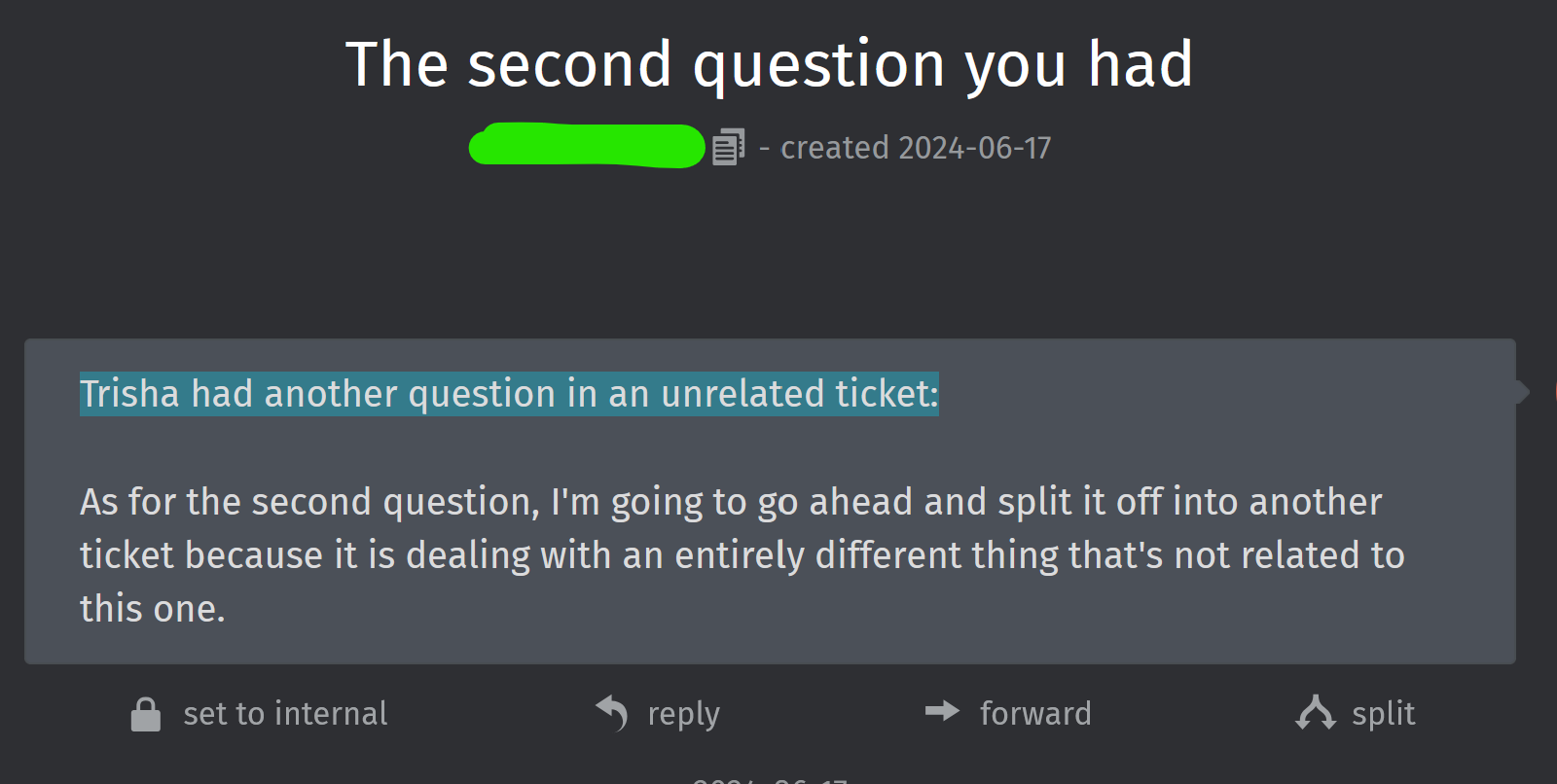
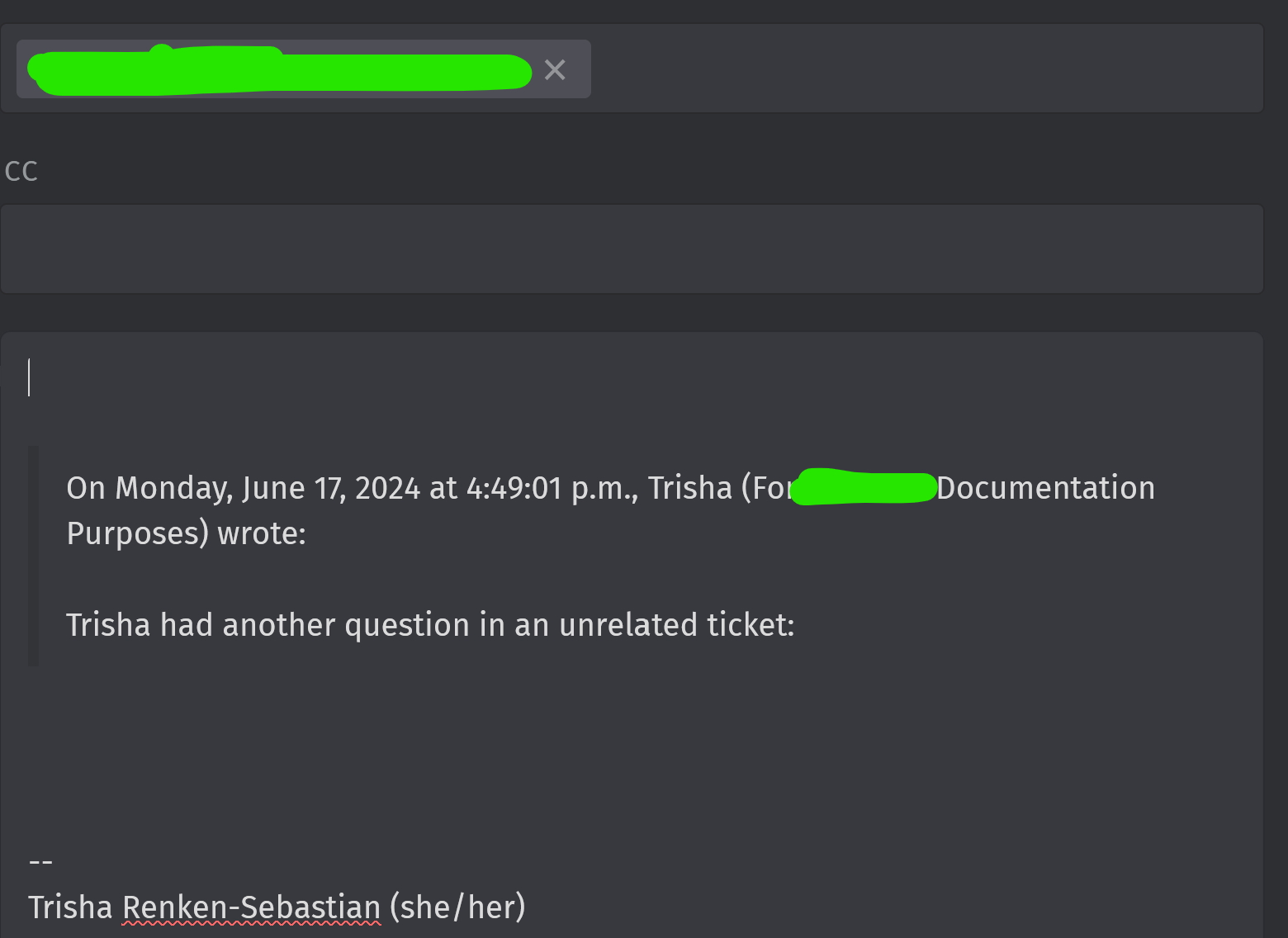
That said, another way of including what the customer wrote in a reply to a ticket is to highlight the text, and then click “Reply”, as seen in this example below:
See how only part of the reply was quoted? This method makes it easier to trim down reply chains which can be cumbersome and confusing for certain types of customers.
Hope this helps!